TomTom, 2016
Status: shipped
Duration: ~ 1 year
Role: Project Design Lead
Scooter sat nav
Goal
The goal of this project was to create the world’s first sat nav (satellite navigation) for scooters.
Outcome
We’ve created and shipped the TomTom VIO: a sat nav device that mounts onto the handlebar of a scooter. It connects to an app to be able to show a map with turn-by-turn navigation, speed camera alerts, real time traffic with alternative routing and caller ID.
Winner of the 'Eye-Catching Product' award at IFA 2016. IFA (Internationale Funkausstellung) is the world's leading trade show for consumer electronics and home appliances
Sales exceeding 50,000 units
VIO device mounted onto the handlebar of a scooter.
VIO device en-route.
User problem
Scooter riders primarily use their phone for navigation. This can be quite challenging: they frequently have to stop to check directions while en-route, being forced to take off their gloves, not to mention the risks of dropping their phone or having it snatched at the traffic light. There’s no solution on the market that solves for these issues.
Business opportunity
TomTom has had success entering niche markets such as motorcycle and truck navigation. By focusing on scooters, TomTom can provide scooter riders with many of the features and technologies found on other TomTom devices and expand their navigation footprint.
Solution
We created the TomTom VIO: a sat nav device that connects to an app over Bluetooth. Everything that is shown on the display of the device is streamed from the app. This way, we could keep our hardware costs low and customers wouldn’t ever have to go through the hassle of updating their device.
The primary persona for this project was the commuter: a person who rides to work frequently, who benefits from knowing traffic conditions and receiving better route alternatives. We’ve designed the experience in such a way that this user wouldn’t have to take their phone out of their pocket at any point along their commute. In the morning, when getting ready to ride to work, the commuter would turn on their device and it would automatically connect to their phone. A map of their area would appear, and they would be able to scan for traffic by interacting with the touchscreen. In just two clicks, they would be able to plan a route to their saved work place. En-route, they would be notified of speed cameras and incoming phone calls, and they would be able to accept better route alternatives with a single click. All with their gloves on. At work, the commuter would just turn off the device and it would automatically disconnect from their phone.
The purpose of the app — apart from its technical function, was to allow customers to plan routes to new places, to manage their places and routes, and to browse a more detailed map. As personalisation was a key focus area for this project, customers were also able to choose their map and route colors from the app, to match the color of their device cover. These colors would be reflected in the app and on the device.
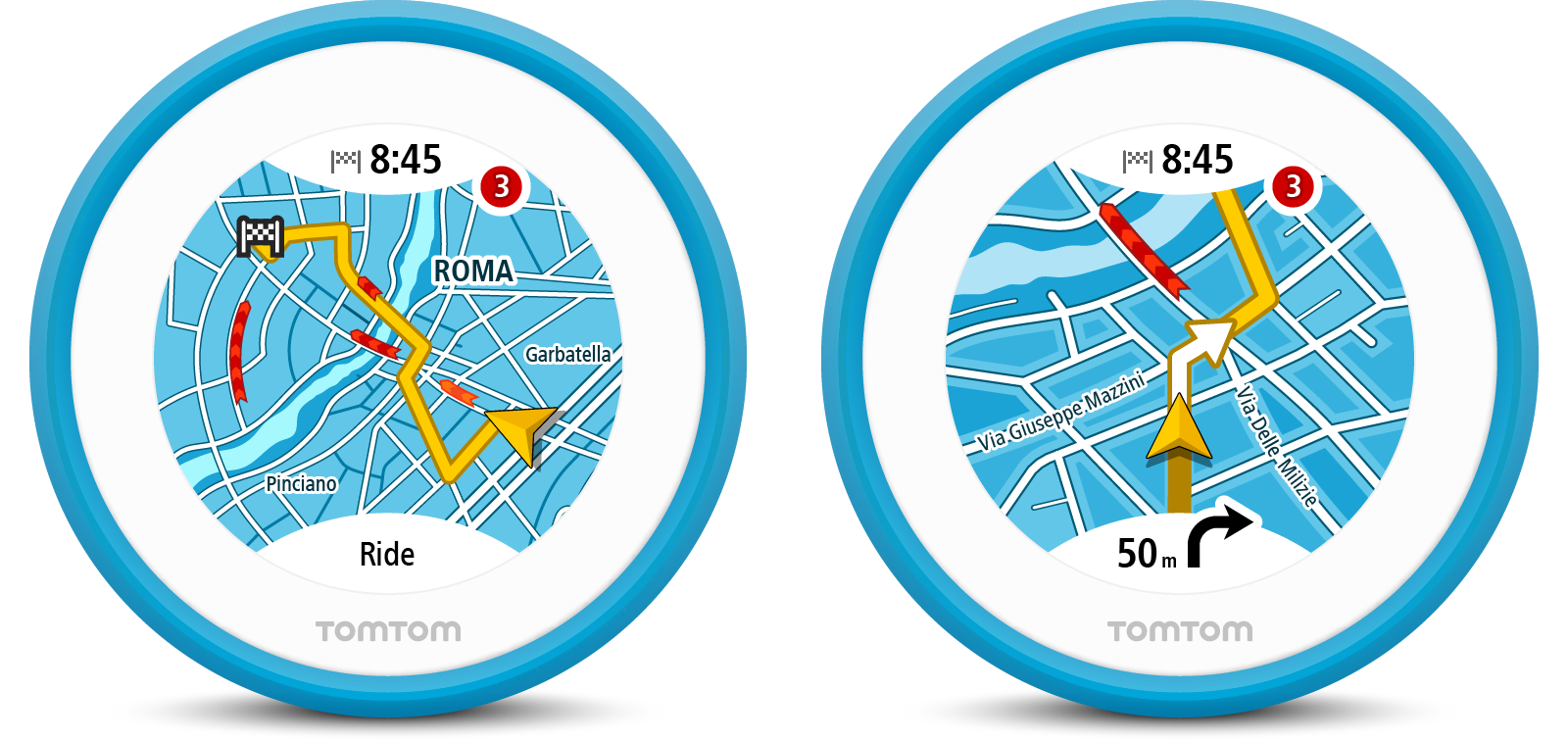
Map views: North up (left) and direction up (right).
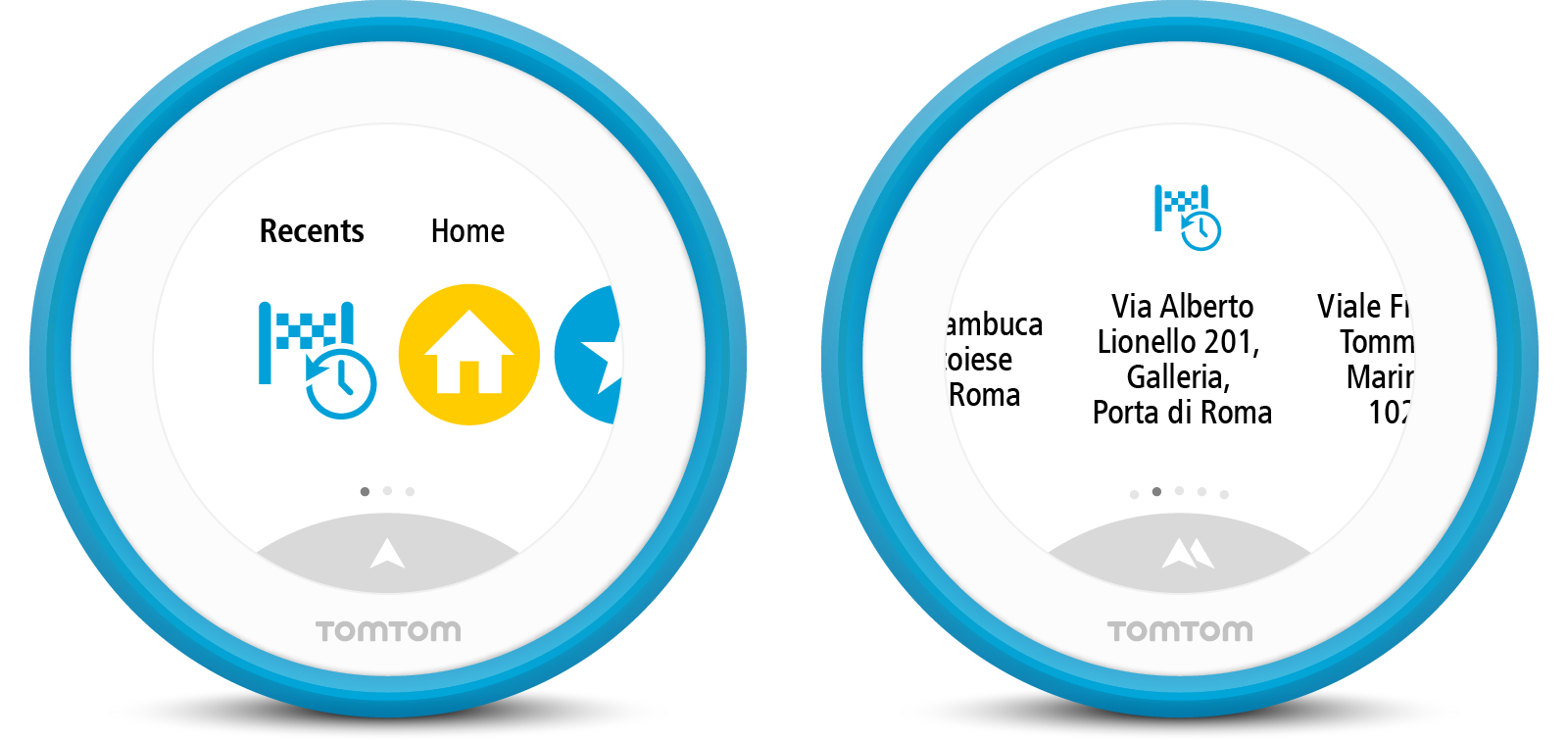
Places carousel (left) and Recents carousel (right).
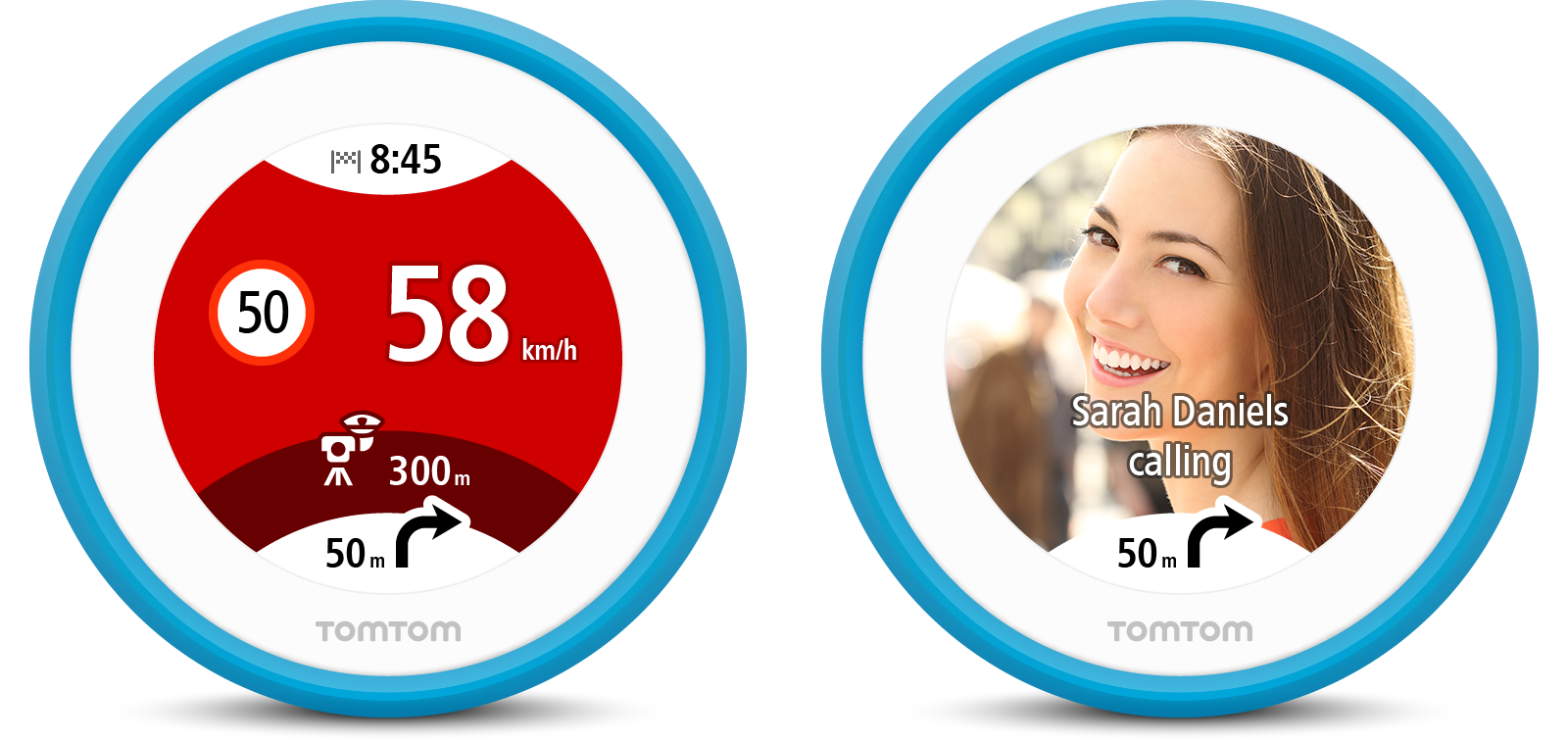
Speed camera (left) and phone call (right) notifications.
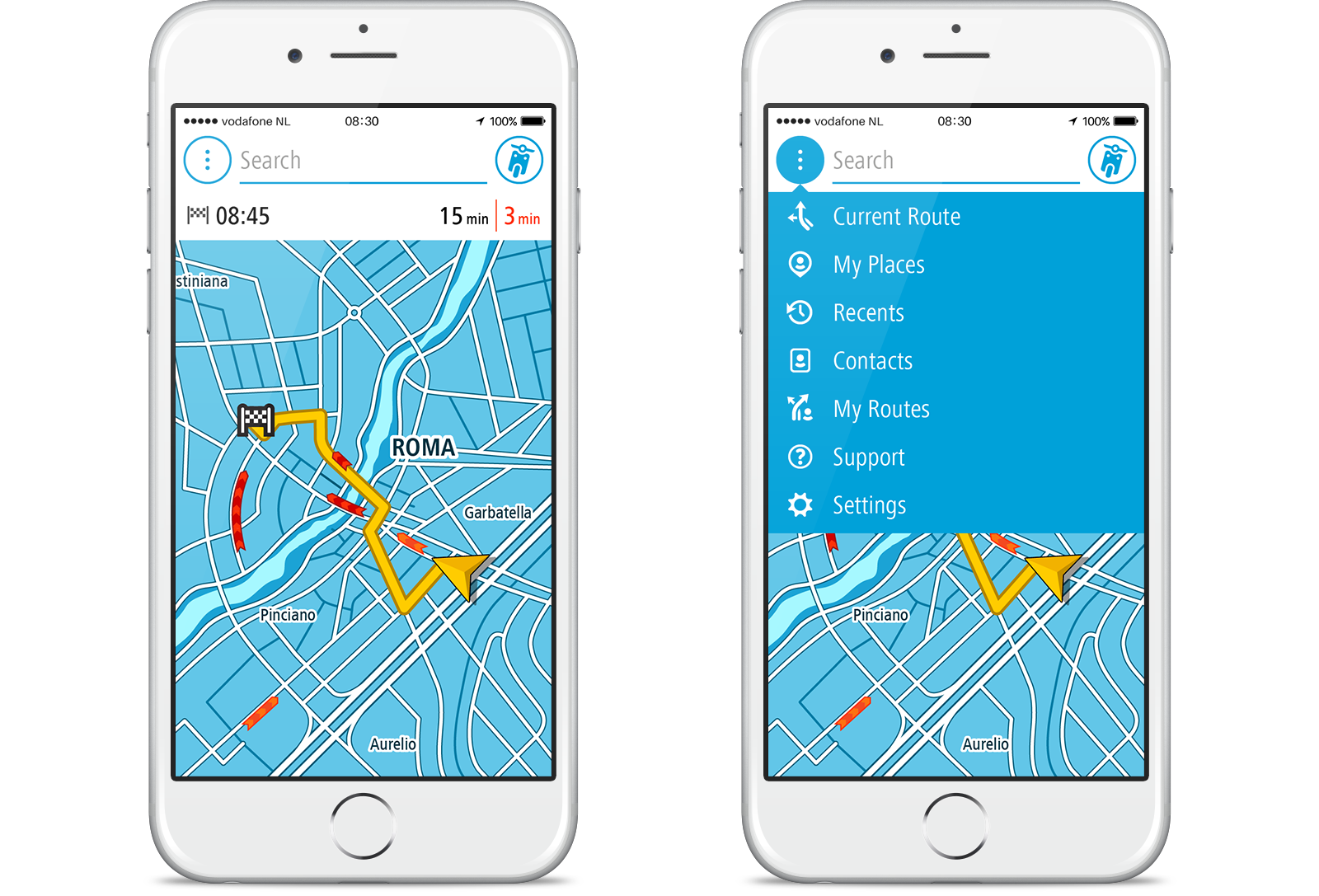
Home screen with menu closed (left) and opened (right).
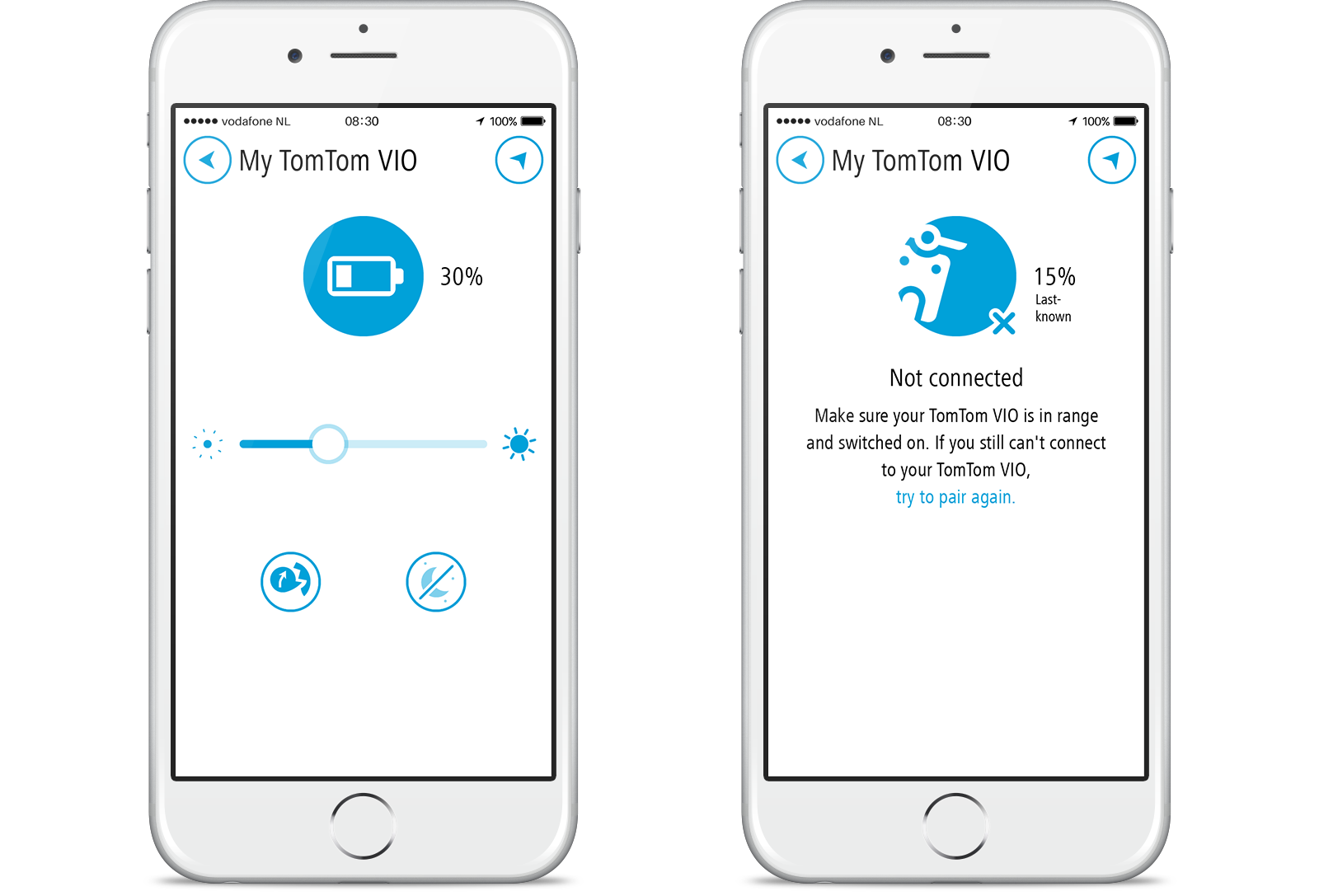
Device status screen: connected (left) and not connected (right).
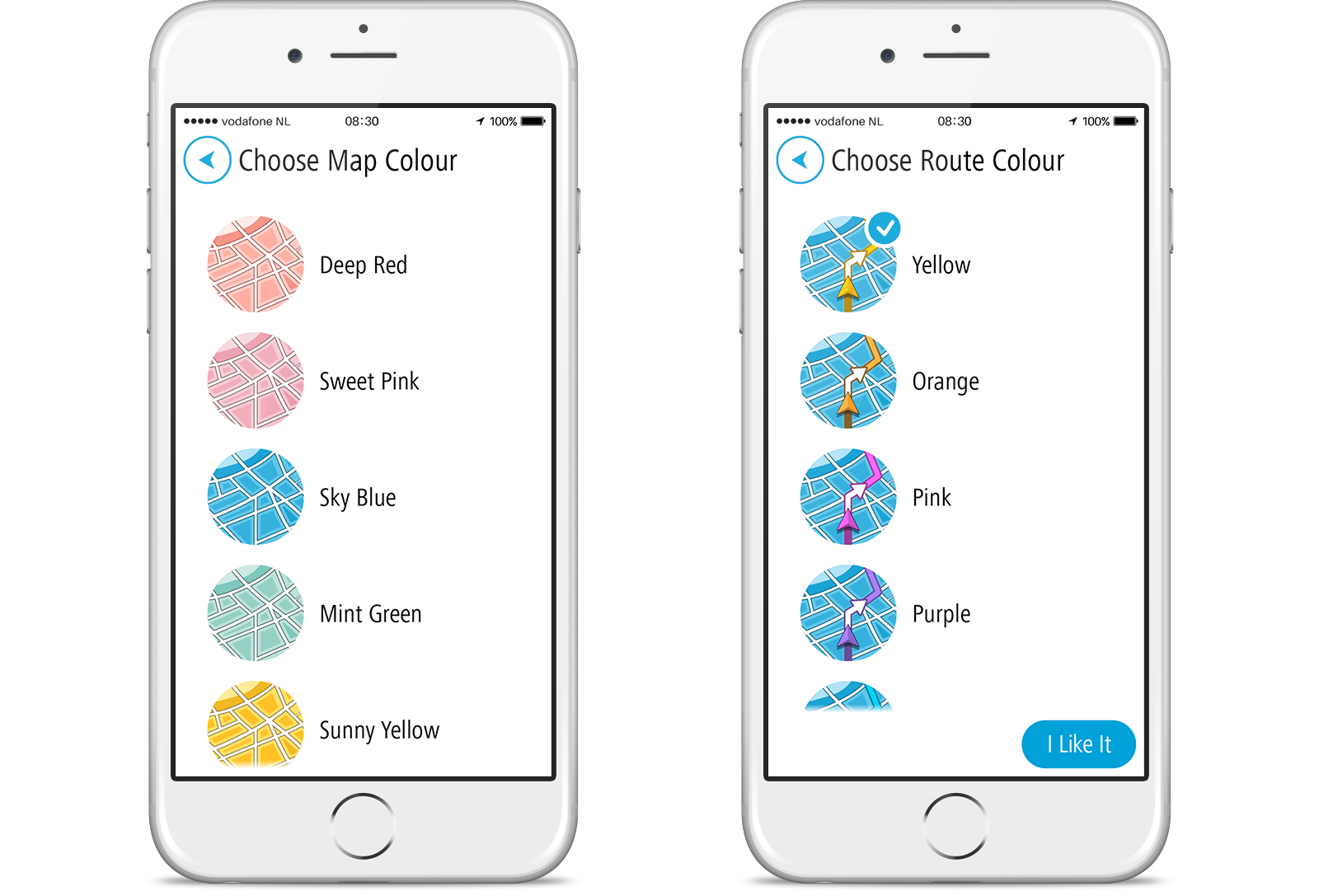
Screens to choose map (left) and route (right) colors.
Snippet of the device startup flow.
Snippet of the app startup flow (Android).